How to Play Multi-Board Wordle: Rules and First Moves
A shared guess can solve one board while testing another. Learn the color rules, choose a useful opener and keep each target’s clues tied to its own grid
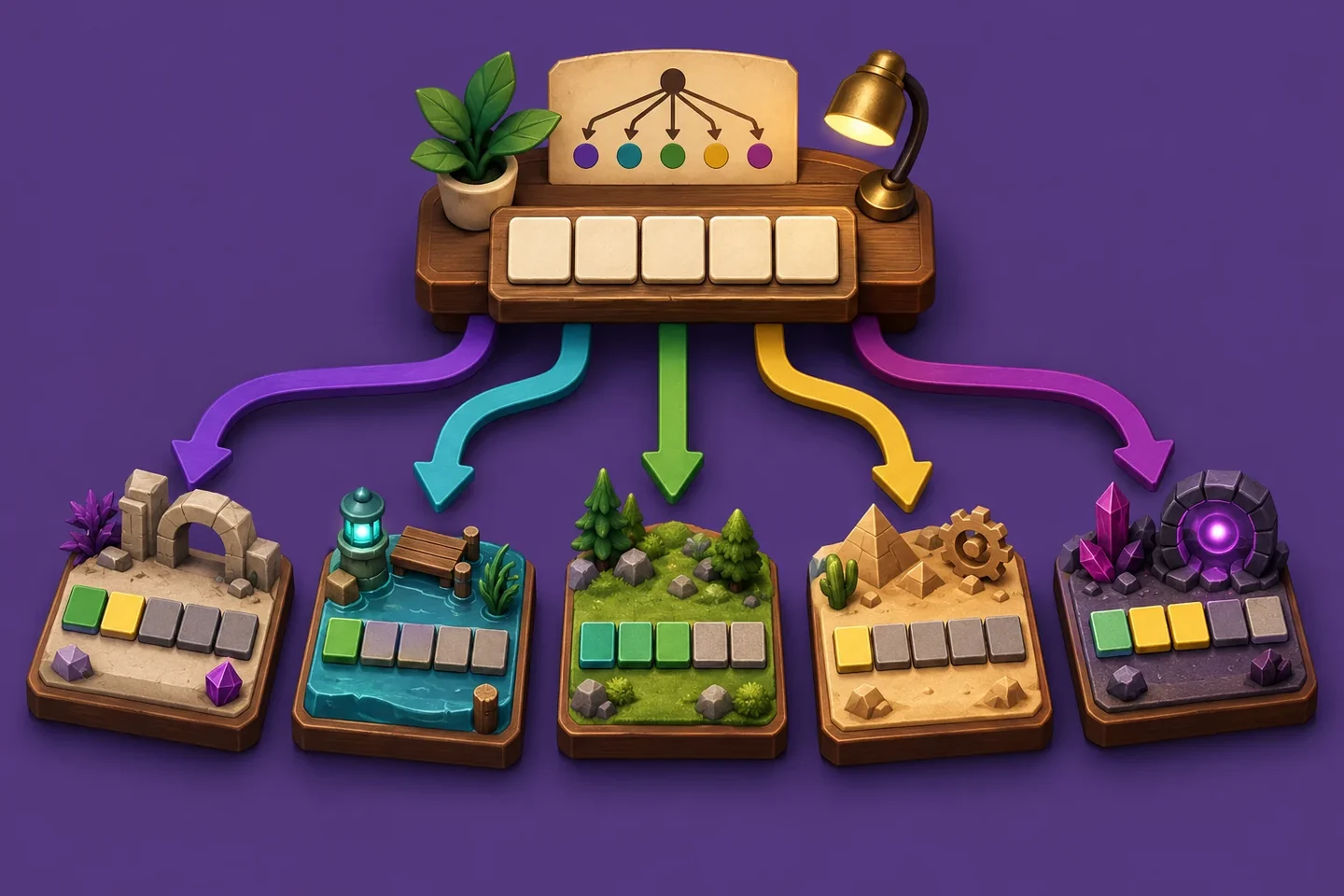
The first turn in a multi-board puzzle is a choice: spend it on a likely answer, or use it to test letters that could help across several grids
What a shared guess actually does
In a multi-board round, one submitted word is checked against several hidden answers. Each target returns its own row of feedback, and the round uses a shared supply of guesses. A word that solves one board can still produce clues on the others, so the turn is not wasted just because it does not advance every answer equally
Green marks a letter in the correct position on that board; yellow means the letter is in the answer but belongs elsewhere. Gray means there is no additional match for that letter after any matching copies have been counted. For instance, if a guess contains two Es but an answer contains only one, one E can be green or yellow while the other is gray. That gray rules out another E, not E altogether
The shared rounds at a glance
| Game | Boards | Round detail |
|---|---|---|
| Dordle | 2 | Each guess goes to both boards; daily puzzle and extra games |
| Duotrigordle | 32 | Thirty-seven guesses; Perfect Challenge uses exactly 32 |
| Octordle | 8 | Each guess goes to all eight boards |
| Quordle | 4 | Four five-letter words share nine guesses |
| Sedecordle | 16 | Twenty-one guesses; daily and unlimited puzzles |
The budget matters as much as the number of targets. Quordle gives nine guesses for four five-letter answers, Sedecordle gives 21 for sixteen, and Duotrigordle gives 37 for 32. Dordle and Octordle apply each word to two and eight boards respectively; their guess allowances are not listed here
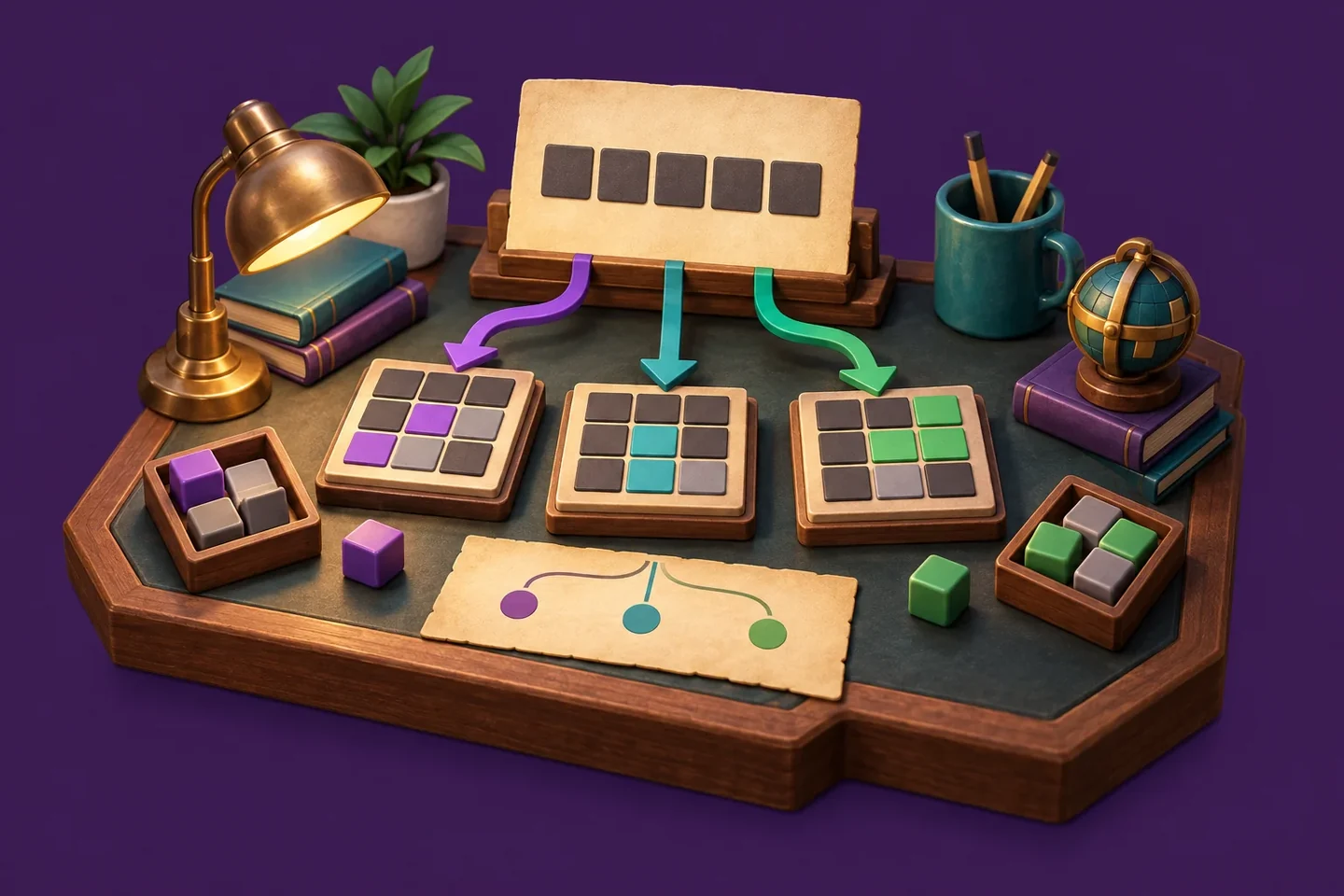
Choose an opener with a job
For a five-letter round, a useful opener often checks five different letters rather than repeating one. That gives the next decision more distinct information. A mix of vowels and consonants can reveal both likely word structure and useful consonant positions, without depending on one special starter for every puzzle
CRANE is a clear example of a probing word: it tests C, R, A, N and E once each. It is not a promise of a quick solve. The point is to choose a valid word whose possible feedback will help narrow candidates, then read the actual rows before deciding what the next word should do
A probe and a solving guess serve different purposes. A probe checks letters that are still unknown; a solving guess tries a word that fits the clues already gathered. A good turn can do both at once, such as testing an answer that fits one nearly solved board while revealing new letters on another
A first-move routine
Check the format
Confirm the active mode and word length before choosing a five-letter opener
Cover different letters
Choose a valid word with distinct letters and a useful vowel-consonant mix
Give the word a job
Decide whether the guess is mainly a probe, a candidate answer, or both
Reassess
After the colors appear, use them to choose the next move instead of repeating a starter by habit
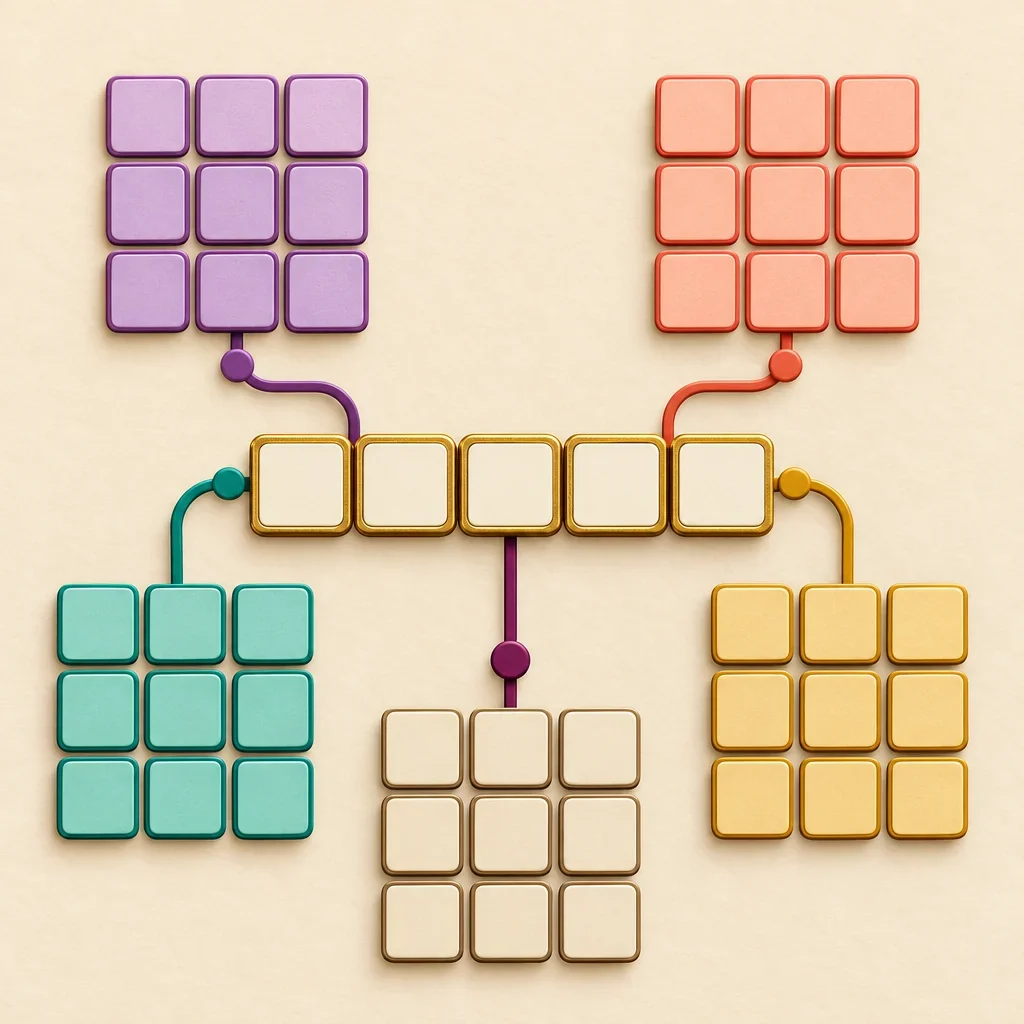
Work the clues one board at a time
Here is a hypothetical CRANE result. Board A shows C green in the first position and E green in the last, while R, A and N are gray. Its pattern is C___E, with R, A and N excluded. Board B shows R and A yellow, while C, N and E are gray. That answer contains R and A, but R cannot be second and A cannot be third
Keep the two records separate. Board A does not rule out R on Board B, and Board B’s yellow A does not change the fixed C and E on Board A. A compact note for A might read “C___E; no R/A/N”; for B it might read “has R, not second; has A, not third; no C/N/E”
CHIDE fits Board A’s visible pattern and exclusions. On Board B it is only a probe: C and E repeat known exclusions, while H, I and D test new letters. This is the trade-off in a shared-guess format: a word can be a candidate on one target and an information test on another
Notes from the example
- Board A: keep the fixed C and E positions with its own exclusions
- Board B: keep R and A, including their forbidden positions, with its own exclusions
- Next choice: decide whether a candidate or a new-letter probe will make the remaining clues clearer
When one board has a narrow pattern and a plausible candidate, a solving attempt can be useful even if another board stays open. When several answers still fit a board, a probe that tests fresh letters may make the following choice clearer
Check the mode before you commit
The board layout can change how you manage attention. Sedecordle’s Sedec-order shows only one unsolved word at a time; Savior chooses the first four words for you; Variations can use words from four to eleven letters. In those Variations, a five-letter opener does not fit every round, so check the mode before typing
Duotrigordle has Daily Sequence, Daily Jumble and Daily Crosswordle, plus a Perfect Challenge that asks for all 32 answers in exactly 32 guesses. Those named variants are separate from the standard 32-board, 37-guess round. Dordle pairs its daily puzzle with as many extra games as you like, while Sedecordle also offers unlimited puzzles
The focus games use different board counts and not all have the same stated guess allowance. Quordle has four five-letter targets and nine shared guesses; Sedecordle has sixteen targets and 21 guesses; Duotrigordle has 32 targets and 37 guesses. Octordle applies guesses to eight boards, and Dordle applies them to two. Check the round’s own rules instead of carrying one game’s budget into another
Multi-board games with shared guesses
-
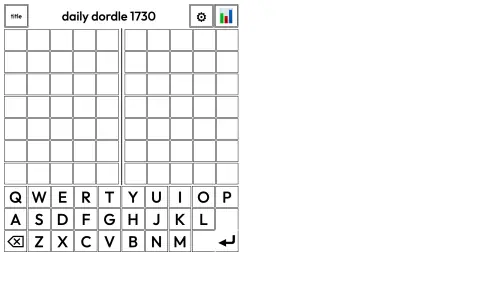
Dordle
Two Wordle boards at once: every guess counts on both words, with a new Dordle each day and as many extra games as you like
-
Quordle
Four five-letter words at once with nine tries for all four, a new puzzle every day on the Merriam-Webster website
-
Octordle
Eight Wordle boards at once, with a new puzzle every day on the Merriam-Webster website
-
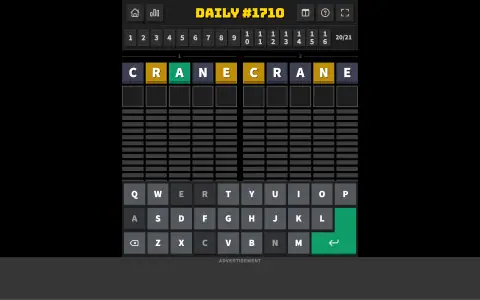
Sedecordle
Sixteen boards and 21 guesses, with a daily puzzle, unlimited free ones and modes such as Sedec-order and Variations
-
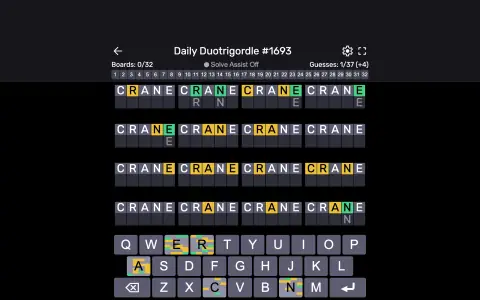
Duotrigordle
Thirty-two boards and 37 guesses, with a new game every day, a practice mode, daily variants and a Perfect Challenge
This is a different setup from Worduel, where two players take turns on one shared board. Worduel is one of our games. There, players share clues while trying to name one target; a multi-board round gives one player several targets at once
For your next puzzle, pause after the opener and name one unresolved uncertainty on each board before choosing the second word