Wordle Variants That Bend the Rules
Wordle’s familiar guess-and-feedback loop survives, but each variant changes a different promise: the target can move, a tile can lie, or time and survival can shape a guess. The clues still matter, but players have to work out what those clues mean
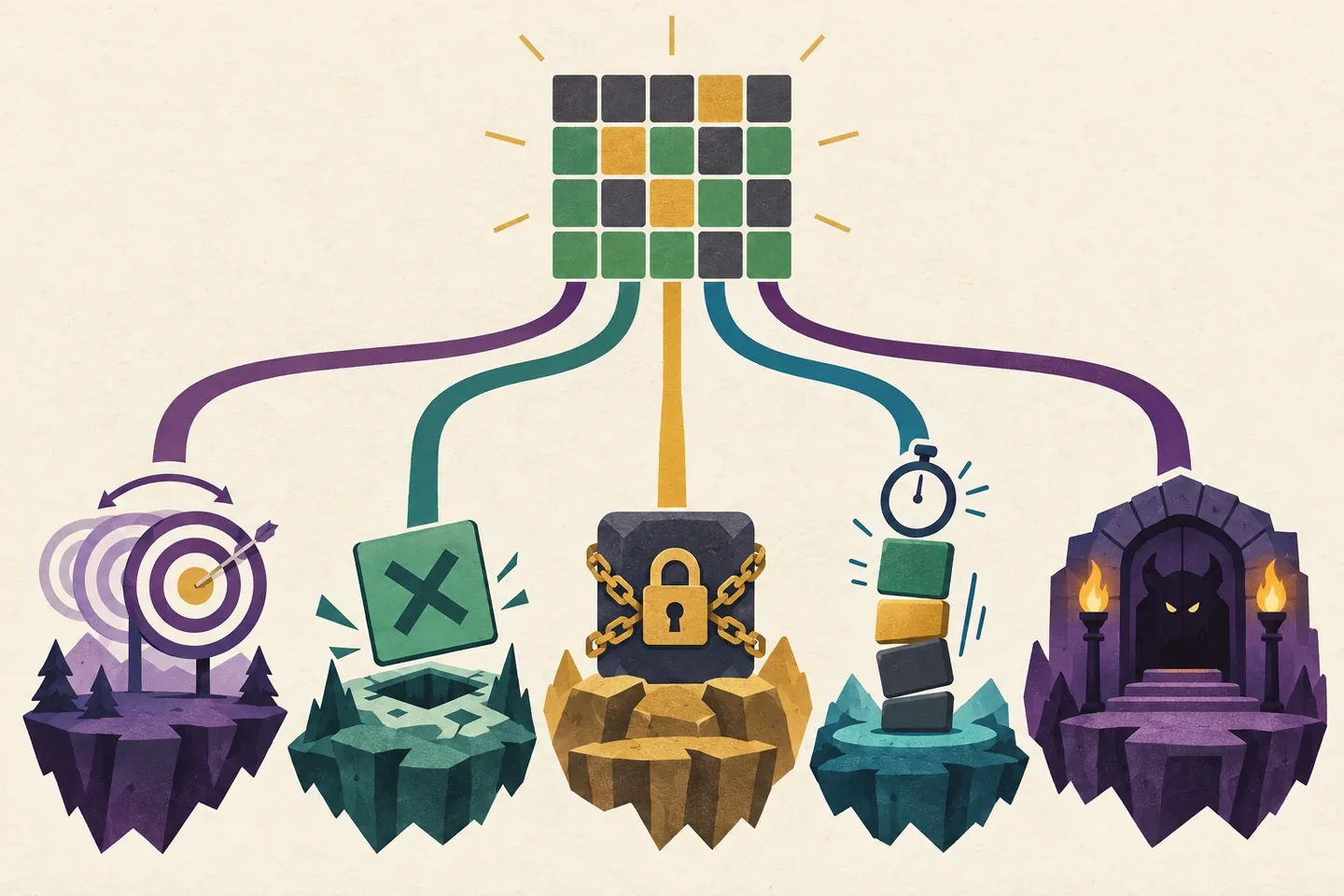
A green tile usually feels like a promise. But what if the target changes after a miss, one tile in every row lies, or a clock is already ticking? These Wordle variants keep the familiar act of guessing and reading colors, then make you question what the row is telling you
The grid stays familiar, but the promise changes
Wordle’s basic rhythm is easy to recognize: enter a word, read the feedback, then use that information to shape another guess. The variants gathered under New rules keep that loop, but loosen one of its assumptions. The answer might not stay fixed, every clue might not be trustworthy, or the board might come with a clock or a rule attached to the current floor
That small change shifts the central question. Instead of asking only which letters fit, you also need to ask what the feedback refers to and what a miss will cost. A color pattern is useful only when you know whether it belongs to the current target, whether it might contain a lie, and whether there is time to test another idea
The same guess-and-feedback loop can produce very different puzzles. The first useful question is where the uncertainty lives: in the target, in a tile, or in the conditions around a guess
Five twists, five kinds of uncertainty
These games move uncertainty to different places. A changed target can make old rows mean something new; a false tile asks you to judge clues individually; a boss or timer changes the conditions for solving
Five distinct rule twists
-
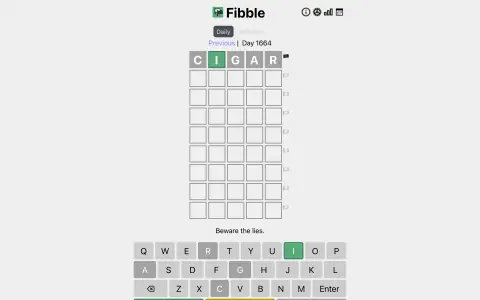
Fibble
Wordle where one tile in every row lies to you, in the same positions for everyone, with daily and unlimited modes
-
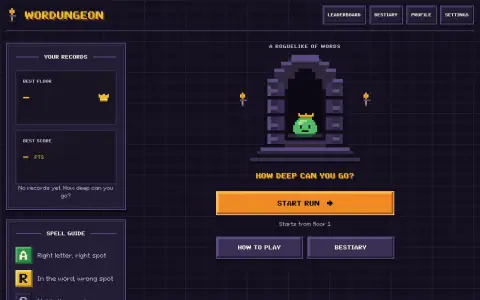
WorDungeon Top Pick
An endless Wordle dungeon crawl with 200 distinct bosses, words in 13 languages and relics after each win, until your lives run out
-
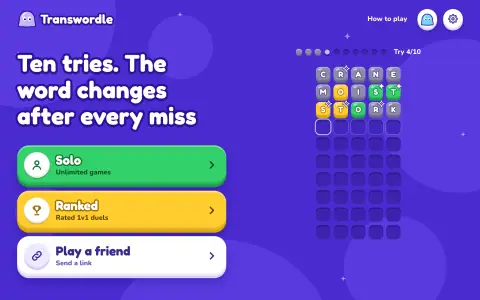
Transwordle Top Pick
Wordle where the word runs away: after every miss the hidden word is swapped for a new one and your earlier rows are recolored
-
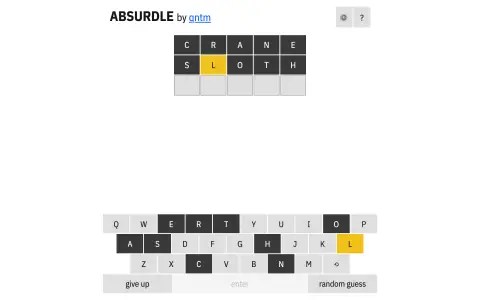
Absurdle
An adversarial Wordle that reveals as little as it can and changes the secret word when it needs to, with unlimited guesses
-
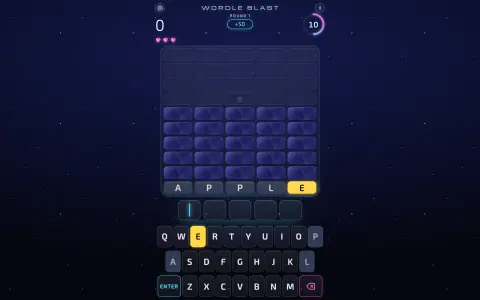
Wordle Blast Top Pick
Wordle in a Tetris-style stack: clue blocks open from the bottom up, and the sooner you guess, the more blocks blow up into points
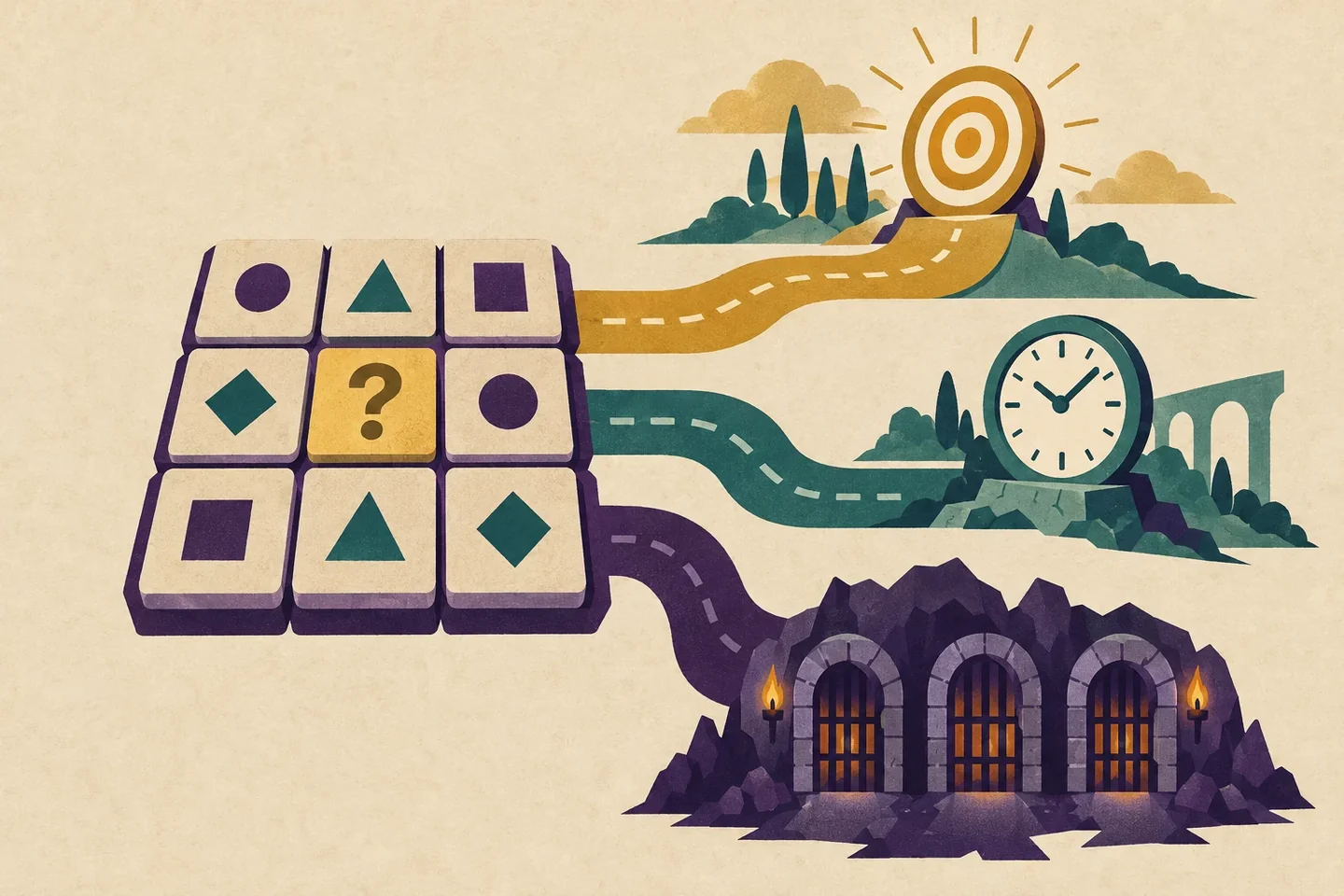
When the target moves or resists
Transwordle makes the moving target explicit. After every miss, the hidden five-letter English word changes. Earlier rows and the keyboard are recolored for the new target, and marks show which tiles moved closer or farther away. A row is still useful, but it is no longer a permanent record of one secret word. Transwordle is one of our games. Solo play gives you 10 tries, with as many games as you like
When the colors change, compare the old and new versions rather than treating the latest row as the only evidence. Pay attention to the marks showing which tiles moved closer or farther, then choose a word that tests the current target. Repeating a guess built around an earlier color pattern can mean reasoning about a word that is no longer there
Absurdle takes a different approach. It gives away as little as it can and changes the secret word if it needs to. With unlimited guesses, there is no fixed guess limit to plan around; the challenge is to narrow the possibilities the game leaves open. A useful guess can test several letters or separate plausible answers, even if it is unlikely to solve the word immediately
When a clue can lie
Fibble puts uncertainty inside each row: exactly one tile gives false information, and the positions of the lies are the same for every player. The other clues can still help, so the task is not to discard an entire guess. Flags let you mark tiles you suspect, while marks help you keep track of the ones you know are true
For a concrete reasoning example, imagine the guess CRANE. If you have independent reason to trust the clues for C, A, N and E, but the R clue conflicts with the possibilities you have kept, preserve that distinction on the board: mark the clues you know are true and flag R as suspect. Then try a word that tests a plausible alternative without relying on the doubtful tile. In Fibble, a mismatch is a reason to investigate, not a reason to throw away every clue in the row
WorDungeon makes the rule depend on the boss guarding each floor. WorDungeon is one of our games. Choose one of 13 word languages, then guess the hidden word while dealing with that floor’s twist. Some bosses put two or four words in play; others add a clock, lying clues or clues hidden in fog. You start with 3 lives, and a win takes you deeper and lets you choose one of three relics. Those boss twists change different parts of the puzzle. Multiple targets create more than one word to manage, a clock adds time pressure, and lying or fog-hidden clues make the feedback harder to read. Before guessing, identify which rule is active on the floor instead of carrying an assumption over from the previous boss
When a guess costs time or a life
Wordle Blast turns the board into a stack of five-cell blocks that open from the bottom up. A wrong guess fills the next block with the word and its colored feedback, then restarts the timer. If the timer runs out first, that block opens with a hint word instead. The timer starts at 20 seconds per block, and perks can add time. Wordle Blast is one of our games. Solve before the stack fills and the blocks still closed blow up into points
A run starts with 3 lives, moves through words from easy to hard, and lets you pick one of three perks after a win. So the guess has two jobs: test your reading of the clues and account for the block it will open if it is wrong. A timeout is not the same as a miss, since it reveals a hint word instead
The timer makes the value of information more immediate. A quick guess can expose another row, but it also advances the stack; waiting for certainty can mean losing the chance to act before the clock runs out. If a perk adds time, count that extra time as part of the available window instead of assuming every block gives the same amount
Read the rule before the first guess
A new variant is easier to read when you first locate the change. Is the target fixed, does the game alter it, can a clue be false, or does a miss carry a cost beyond another row? That quick check tells you which parts of your usual Wordle habits still apply
A quick check for a new ruleset
Identify the target
Check whether a miss changes the target or only adds another clue
Track clue reliability
Separate confirmed information from clues the rules say may be false
Read the cost
Notice whether a miss, timeout or lost life changes the run
Fit the next guess
Choose a word that tests the rule active on the board now
The satisfying moment is not always the green row. Sometimes it is noticing which rule made your old reasoning stop working